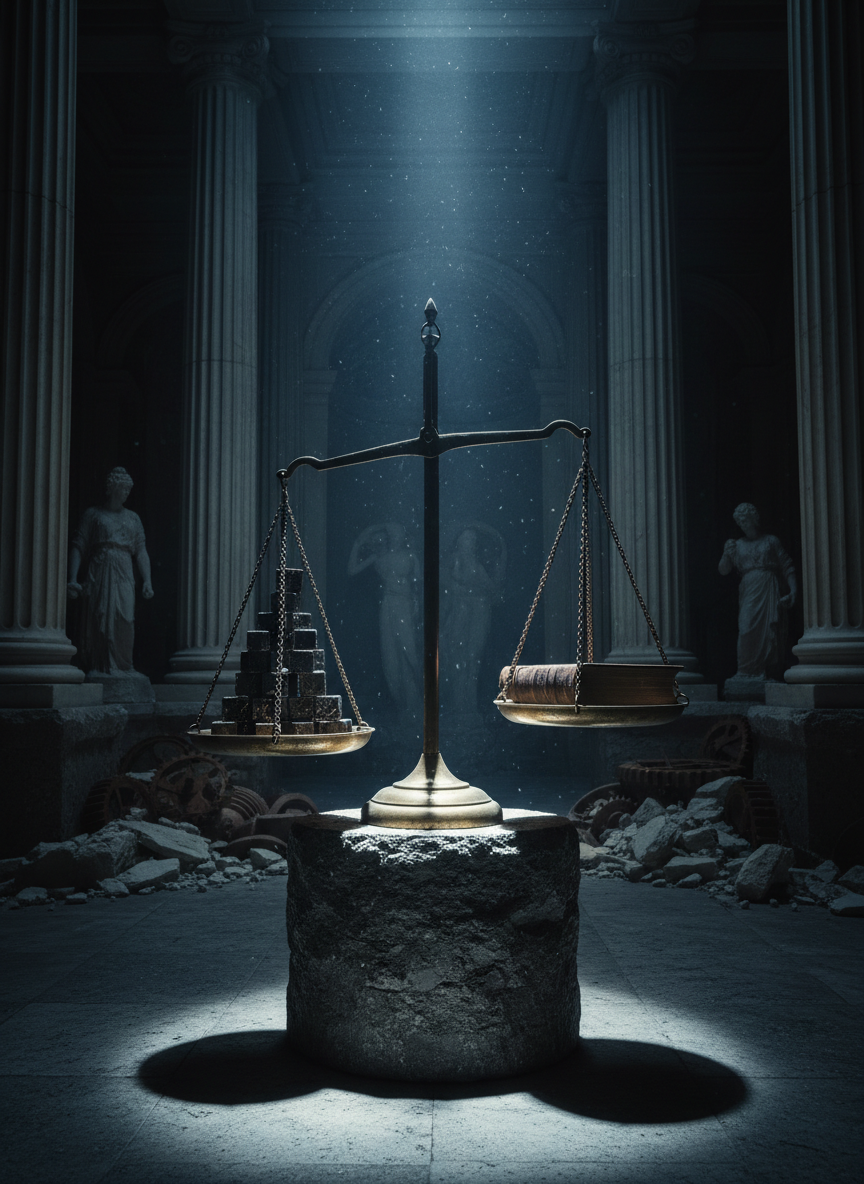
An old, slightly tarnished brass balance scale stands centered on a stone pedestal, its two plates unevenly weighted by stacks of small, unmarked metal cubes on one side and a single thick law book on the other. The background reveals a dark, cavernous hall lined with towering marble columns and shadowy niches filled with indistinct symbolic objects like broken gears and crumbled plaster walls. A narrow shaft of cold, directional light from high above slices through the gloom, illuminating swirling dust and tracing sharp highlights along the scale’s edges. Shot from a low-angle, cinematic perspective with strong contrast and deep shadows, the composition feels solemn and critical, capturing the fragile balance of justice in a stark, realistic photographic style.

Qui est Pierre Aguet ?

Repères biographiques, influences et partis pris pour situer une démarche critique face au désordre contemporain.

Présentation

Ancien journaliste et observateur obstiné des métamorphoses du pouvoir, Pierre Aguet croise histoire, philosophie politique et critique sociale. Son blog propose des analyses sans complaisance de la décomposition démocratique, éclairées par les travaux d’Orwell, Arendt, Michéa ou Debord, pour comprendre ce que devient notre présent.
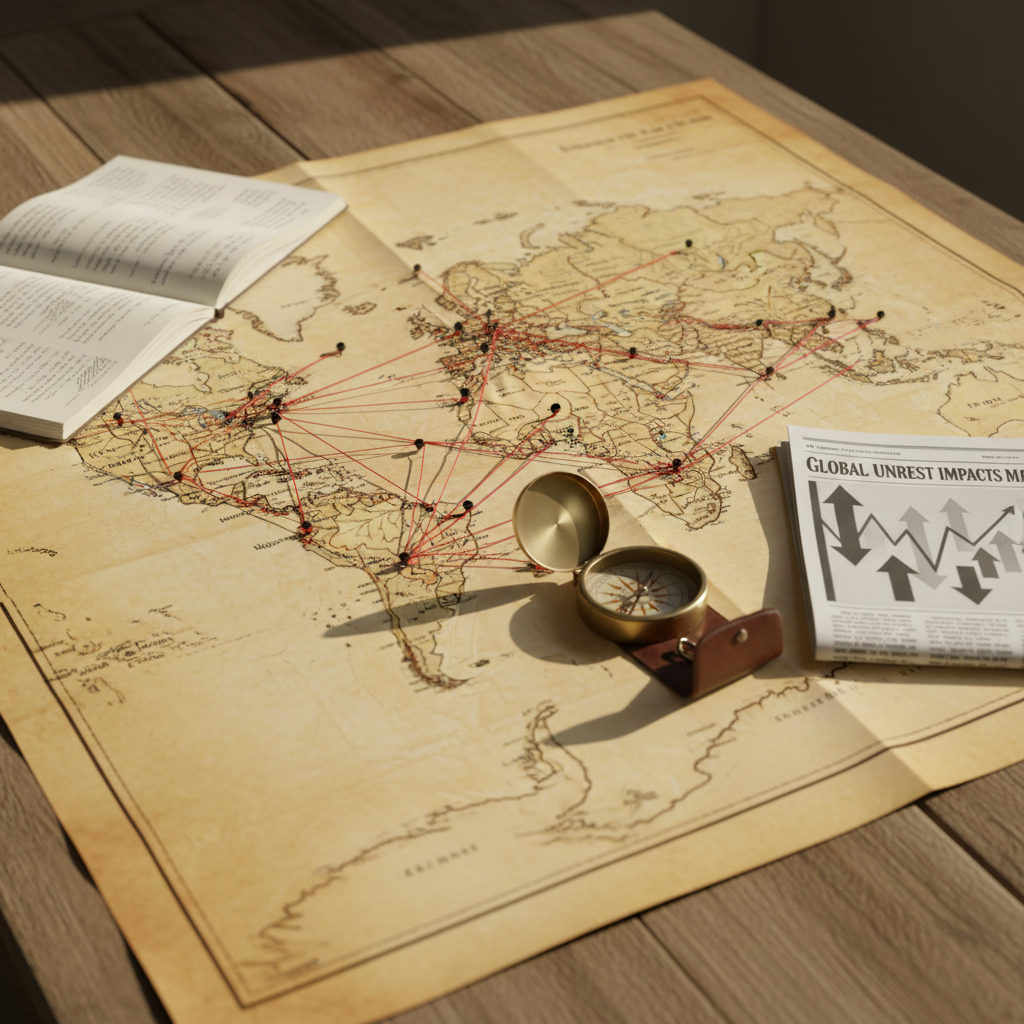
A sprawling world map printed on heavy, slightly yellowed paper lies flat on a broad oak table, its surface overlaid with thin red string connecting dozens of small black pushpins anchored in various capitals and conflict zones. Scattered around are open analytical notebooks, a vintage brass compass, and a monochrome newspaper front page showing dramatic stock market charts without any photos. Soft, directional morning light enters from the left, creating long, gentle shadows from the pins and strings, emphasizing the web-like structure. Captured from a high, three-quarter overhead angle with moderate depth of field, the composition has an investigative, strategic mood, suggesting geopolitical analysis and the interconnection of global crises in a crisp, documentary-style photograph.
A formal conference table of matte black wood stretches into the distance inside a modern, glass-walled meeting room. The polished surface is meticulously organized with a single open leather-bound notebook, a classic steel fountain pen, and a tablet displaying a complex line graph of democracy indices and economic trends. Beyond the glass, a hazy cityscape of anonymous office towers appears softly out of focus. Cool, diffused late-afternoon light washes the room, creating clear reflections on the table and subtle shadows under the objects. Photographed from a slightly low, diagonal angle with strong leading lines, the mood is professional, analytical, and slightly tense, evoking high-stakes political decision-making in a clean, photographic realism style.

Comment se fabriquent ces analyses ?

Les articles de ce blog naissent d’un va-et-vient constant entre l’actualité brute, la mémoire historique et la lecture d’auteurs exigeants. Je commence le plus souvent par situer un événement dans une courte frise chronologique, afin de rappeler d’où nous venons et d’éviter les indignations sans mémoire. Vient ensuite un travail de vérification des faits et des sources, autant que possible à partir de documents primaires et de statistiques publiques, avant de formuler une interprétation personnelle clairement assumée comme telle. Les textes mêlent ainsi enquête, mise en perspective longue durée et prise de position argumentée, avec pour ambition de résister au prêt-à-penser médiatique et aux réflexes partisans automatiques.